Coworking Space Design: 9 Features That Improve Productivity
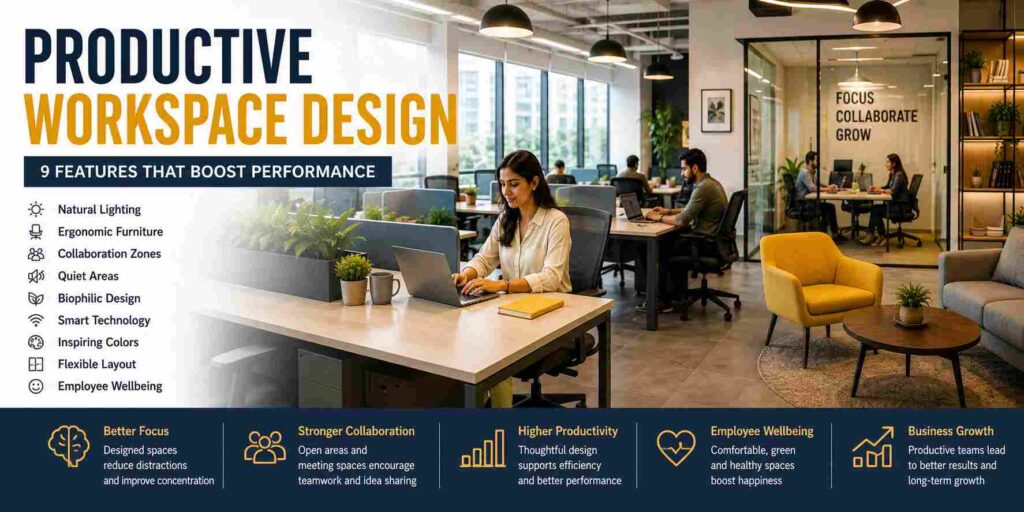
A well-designed coworking space is more than an attractive place to work. Coworking space design can influence how people focus, collaborate, communicate, and experience their working day. The right combination of lighting, furniture, workspace layout, technology, and shared areas can create an environment that supports productive work.
For startups, freelancers, growing businesses, and corporate teams, choosing the right workspace means looking beyond the monthly price. The physical environment, available facilities, accessibility, flexibility, and ability to support different working styles all matter.
In this guide, we’ll explore 9 important coworking space design features that can contribute to a more productive and comfortable workplace.
Productive Workspace Design: 9 Features That Improve Performance
1. Natural Lighting Improves Focus and Comfort
Lighting is an important part of workspace design. A workspace with good access to natural light can create a brighter and more comfortable working environment.
When evaluating a coworking space, consider:
- Availability of natural light
- Position of desks near windows
- Quality of artificial lighting
- Glare on computer screens
- Lighting in meeting and collaboration areas
Where natural light is limited, suitable artificial lighting can help maintain a comfortable environment throughout the working day.
2. Ergonomic Workstations Support Long-Term Work
People often spend several hours working at a desk, making comfort an important consideration when choosing a workspace.
A well-designed coworking space should consider:
- Ergonomic chairs
- Suitable desk height
- Adequate desk space
- Comfortable workstation layouts
- Appropriate screen positioning
Ergonomic furniture can help reduce unnecessary physical discomfort and support a better working experience.
3. Quiet Zones and Collaboration Areas Need Balance
Not every task requires the same type of workspace.
Some employees need quiet areas for focused work, while others need collaborative spaces for discussions, brainstorming, and teamwork.
A productive coworking space can include:
- Quiet work areas
- Open collaboration zones
- Private cabins
- Meeting spaces
- Areas for informal discussions
- Phone-call-friendly spaces
The objective is to provide different environments for different types of work rather than expecting everyone to work effectively in one type of space.
4. Workspace Layout Should Support Different Work Styles
The coworking space design layout can influence how people move, communicate, and use the available workspace.
A practical layout should make it easy to:
- Move between work areas
- Access common facilities
- Collaborate with colleagues
- Find a quiet place when needed
- Conduct private conversations
- Use shared resources efficiently
For smaller offices, smart space planning becomes even more important. A small coworking space design should make efficient use of available floor space without making the environment feel crowded.
5. Biophilic Design Can Improve the Workplace Experience
Biophilic design incorporates natural elements into the workplace environment.
Common examples include:
- Indoor plants
- Natural materials
- Green areas
- Natural textures
- Large windows
- Views of outdoor spaces
These elements can make a workspace feel more welcoming and comfortable. For businesses, creating a pleasant workplace environment can also contribute to a better overall employee experience.
6. Workspace Design Influences Collaboration
The physical layout of a workspace can affect how easily people communicate and work together.
Well-planned collaborative areas can support:
- Knowledge sharing
- Team discussions
- Brainstorming
- Informal conversations
- Faster communication
- Cross-team interaction
This can be particularly useful for startups and growing businesses where collaboration and communication are important parts of everyday work.
For more information about the relationship between workplace environment and employee performance, see our guide on how to improve employee productivity. How to Improve Employee Productivity: 8 Strategies for Managers
7. Reliable Technology Infrastructure Is Essential
Good workspace design is not only about furniture and interiors. Technology infrastructure is equally important.
Before choosing a coworking space, check whether it provides:
- Reliable high-speed internet
- Power backup
- Video conferencing facilities
- Meeting room technology
- Easy access to power points
- Suitable technology for hybrid work
A visually attractive workspace cannot compensate for unreliable internet or inadequate technology.
For businesses looking for a flexible office environment, you can also explore flexible office space in Delhi-NCR. Flexible Office Space in Delhi NCR for Startups & SMEs
8. Workspace Design Should Support Business Growth
A workspace should not only meet today’s requirements. It should also accommodate changes as the business grows.
When evaluating coworking space design, consider:
- Flexible seating options
- Private cabins
- Dedicated desks
- Space for additional team members
- Collaboration areas
- Meeting facilities
- Scalable workspace options
This is particularly important for startups and SMEs whose team size may change over time.
Businesses can also compare different workplace models, such as managed office space and traditional offices, before making a long-term decision. Managed Office Space vs Traditional Office: Which is Better
9. Location and Accessibility Matter
Even the best-designed workspace may not be practical if it is difficult for employees or clients to reach.
When comparing coworking spaces, consider:
- Distance from public transport
- Metro accessibility
- Parking availability
- Surrounding business areas
- Accessibility for employees
- Convenience for clients and visitors
For example, businesses can compare workspace options based on their preferred business location:
- Noida Sector 3 for businesses looking for a professionally connected workspace in Noida. CO-OFFIZ Noida Sector 3
- Gurugram Sector 58 for businesses operating around Golf Course Extension Road. CO-OFFIZ Gurugram Sector 58
- Preet Vihar for professionals and businesses based in East Delhi. CO-OFFIZ Preet Vihar
Choose the location based on where your employees, clients, and business activities are concentrated.
How to Choose a Productive Coworking Space
When comparing coworking spaces, don’t judge the workspace only by its appearance.
Consider these five areas:
1. Workspace Quality
Check furniture, lighting, ventilation, cleanliness, layout, and available work areas.
2. Technology
Check internet reliability, power backup, meeting technology, and connectivity.
3. Flexibility
Understand the available seating options, membership terms, private offices, and scalability.
4. Accessibility
Consider commute time, metro connectivity, parking, and access for employees and clients.
5. Working Environment
Look at noise levels, collaboration opportunities, privacy, community, and overall atmosphere.
A workspace that performs well across these areas is more likely to support productive day-to-day work.
Productive Coworking Space Design Checklist
Before joining a coworking space, ask:
- Does the workspace receive sufficient natural light?
- Are the workstations comfortable and ergonomic?
- Is the layout suitable for focused work?
- Are quiet areas available?
- Are collaboration areas available?
- Is the internet reliable?
- Is power backup available?
- Are meeting facilities suitable for business needs?
- Is the location convenient for employees and clients?
- Can the workspace accommodate business growth?
- Does the overall environment feel comfortable and professional?
A workspace doesn’t need to look expensive to be productive. Good design is about making the available space work effectively for the people using it.
Frequently Asked Questions
How does coworking space design affect productivity?
Coworking space design can influence focus, comfort, communication, collaboration, and the overall working experience. Layout, lighting, furniture, technology, and quiet areas are important considerations.
What makes a coworking space productive?
A productive coworking space typically combines comfortable workstations, reliable internet, suitable lighting, quiet areas, collaboration zones, technology infrastructure, and a convenient location.
What should I look for in coworking space design?
Look at the workspace layout, lighting, ergonomic furniture, noise levels, privacy, collaboration areas, technology infrastructure, accessibility, and flexibility.
How important is coworking space layout?
The layout determines how efficiently people can use the available space. A good layout provides a balance between focused work, collaboration, privacy, and shared facilities.
Can a small coworking space be productive?
Yes. A small coworking space can be productive when the available area is planned efficiently. Flexible seating, smart storage, appropriate desk layouts, quiet areas, and multipurpose spaces can help maximize limited space.
Final Thoughts
Coworking space design is about much more than aesthetics. A well-planned workspace should make it easier for people to focus, collaborate, communicate, and work comfortably.
From natural lighting and ergonomic workstations to flexible layouts, reliable technology, quiet zones, and convenient locations, each element contributes to the overall workspace experience.
For startups, freelancers, SMEs, and established businesses, the right coworking environment can provide the infrastructure and flexibility needed to work effectively without managing every aspect of a traditional office.
If you’re comparing coworking spaces, look beyond the interiors. Evaluate the design, layout, technology, comfort, accessibility, flexibility, and working environment together.
About CO-OFFIZ
CO-OFFIZ provides coworking and flexible workspace solutions for professionals, freelancers, startups, SMEs, and growing businesses across Delhi-NCR.
Our workspaces offer facilities such as high-speed internet, ergonomic seating, meeting rooms, breakout areas, power backup, housekeeping, security, and pantry facilities.
CO-OFFIZ locations include Preet Vihar, Netaji Subhash Place (NSP), Noida Sector 3, Noida Sector 63, and Gurugram Sector 58.
If you’re looking for a professionally designed workspace that supports focused work, collaboration, and business growth, explore CO-OFFIZ coworking spaces across Delhi-NCR.